
Sci-fi has always been one of my favorite genres, though people tend to lump it together with fantasy and the two aren't the same thing. Fantasy builds a world that couldn't exist. Sci-fi builds one that could — a window into the future, whether it's Blade Runner, The Fifth Element or anything else in that tradition. Black Mirror takes that concept and pushes it even further. It's an anthology, which means it can also be watched as a collection of standalone films, and these are my favorite.
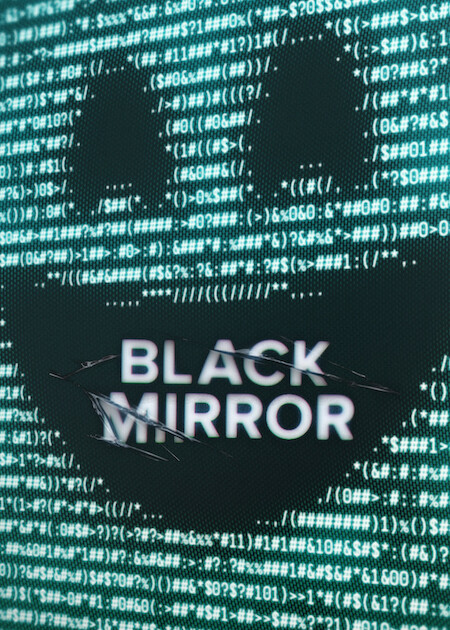
Black Mirror — a contemporary rework of The Twilight Zone
Nosedive — S03E01
I was already a fan of the show before this one, but this episode is the one that blew me away. A world where every interaction is rated out of five stars and your score determines your rent, your flight seat, your social standing — everything. What makes it land isn't the premise, it's how close it sits to the idea of a social credit system — a real concept some places have flirted with, just without the star ratings hovering over everyone's head in real time. The main character isn't chasing status for its own sake, she's chasing quantified social approval — the same craving that makes people refresh a post just to see the like count go up. Black Mirror just turned that craving into a literal number and let it run the entire economy.
If someone can only watch one episode, for whatever reason, this is the one I'd tell them to pick.
Playtest — S03E02
On the surface this is a horror episode about a guy beta-testing an augmented reality game. Underneath it, it's about how comfortable we've gotten letting a piece of software profile us more intimately than the people around us do. The game doesn't scare him with generic jump scares — it mines his own psychological profile and builds his specific fears out of it, in real time. That's the phenomenon worth sitting with: we already hand over that level of personal data to apps that just want to sell us something. Playtest asks what happens when something actually uses it.
The structure sells the idea perfectly — you genuinely can't tell where the personalization ends and reality begins and neither can he.
San Junipero — S03E04
This one doesn't need a sociological angle. It's simply beautiful. Two women meet in a nostalgic, neon 1980s beach town — except the town is a simulated afterlife and one of them is dying in the real world. It's the rare Black Mirror episode that isn't a warning. It's optimistic, almost tender, about what technology could mean when it's built to give people more time, not less.
The ending — the two of them dancing to Heaven Is a Place on Earth as the credits roll over a server room — is one of the best closing shots the show has ever produced. It's a genuinely happy ending, which somehow makes it hit harder than most of the sad ones.
Smithereens — S05E02
The odd one out on this list, because there's no futuristic tech here at all — just a rideshare driver, a kidnapping and a social media company that behaves exactly like the ones that already exist. The phenomenon isn't speculative, it's current: a reflex most people already have — checking a notification the second it lands, without even deciding to — and a company that knows exactly how deliberately it engineered that reflex. Andrew Scott's performance carries the whole thing and the ending refuses to give you the closure you're waiting for.
Common People — S07E01
A woman gets a brain implant that keeps her alive after a medical emergency — except the company behind it runs on a subscription model and every upgrade tier unlocks something that used to just work. It's Black Mirror doing what it does best: taking something recognizable — a subscription you can't cancel, a price that keeps creeping up, a free tier that gets worse on purpose — and pushing it just far enough to be unbearable.
No twist, no reveal. Just a slow, deliberate squeeze and it's brutal precisely because of how ordinary it all feels.
The window, not the fantasy
None of these episodes needed to invent a new fear. They just pointed a camera at a habit we already have — the need for approval, the willingness to be profiled, the addiction to notifications, the subscription we can't quit — and let it run a few years further down the road. That's the difference between fantasy and science fiction. Fantasy shows you somewhere you'll never go. Sci-fi shows you somewhere you might already be standing.